Zirconia vs. Titanium Dental Implants: Which Is Right for You?
Search "dental implants" online, and you will find conflicting opinions on which material is better for a dental implant procedure: zirconia or titanium. Some sites push metal-free dental implants as the only safe choice for every patient. Others insist titanium is the proven standard, and nothing else compares.
The truth sits in the middle, and it depends on your health history, not on which website you read first.
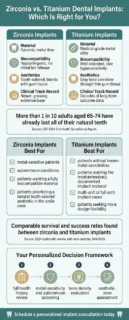
More than 1 in 10 adults aged 65 to 74 have already lost all of their natural teeth, according to the CDC 2024 Oral Health Surveillance Report.
This guide breaks down the differences between zirconia and titanium so you can walk into your dental implant procedure consultation knowing the right questions to ask.
Zirconia suits patients who want a fully biocompatible option or who have known metal sensitivities, while titanium remains a strong choice for patients without sensitivity concerns who want the most researched implant material on the market.
Quick Comparison: Zirconia vs. Titanium Dental Implants
Before you commit to either material for your dental implant procedure, this side-by-side view shows where zirconia and titanium differ most and where they perform about the same.
| Criterion |
Zirconia Implants |
Titanium Implants |
| Material |
Ceramic, metal-free |
Medical-grade metal alloy |
| Biocompatibility |
Metal-free, with no titanium or other metal components |
Well-tolerated by most patients, rare hypersensitivity cases |
| Aesthetics |
Tooth-colored, blends with gum tissue |
Gray tone may show through thin gum tissue. |
| Regulatory oversight |
Meets FDA-recognized biocompatibility standards |
Meets FDA performance criteria for endosseous implants |
| Survival rate |
Comparable outcomes reported in a 2024 systematic review and meta-analysis |
Comparable outcomes reported in the same 2024 systematic review |
What Zirconia Implants Do Best
Zirconia implants give metal-sensitive patients a metal-free, tooth-colored option for tooth replacement, and a qualified provider can evaluate that choice based on your bone density and health history.
Metal-Free Biocompatibility for Sensitive Patients
Zirconia implants contain no metal at all. This matters for patients who react to metal ions or want to avoid metal exposure in their bodies. Dental material safety in the United States follows the ANSI/ADA Standard No. 41-2020, Evaluation of Biocompatibility of Medical Devices Used in Dentistry. Zirconia implants are metal-free and can be evaluated for biocompatibility under this standard. Zirconia dental implants are made entirely from a ceramic material that contains no metal. They avoid the potential for hypersensitivity associated with metal components. Patients with a known metal allergy or a preference for a metal-free material can discuss zirconia with their dentist after a complete health history review.
Aesthetic Advantage in the Smile Zone
Zirconia is tooth-colored all the way through. It does not create the gray shadow that can show through thin gum tissue near titanium implants, particularly around front teeth. Patients who prioritize a natural smile line in the aesthetic zone often lean toward zirconia for this reason alone.
What the Zirconia Implant Placement Process Involves
A zirconia implant placement process typically starts with a full health history review, followed by imaging to confirm bone density at the implant site. The provider places the ceramic implant, allows time for it to integrate with the jawbone, then attaches the final restoration once healing is complete. Because zirconia implants are metal-free, patients who prefer to avoid metal components can choose them as an alternative to titanium implants.
Your Personalized Decision Framework
No single statistic or brand claim should decide which implant material goes into your jaw. A responsible provider builds the decision around your medical and dental history, treatment goals, and lifestyle factors. That review should cover metal sensitivity and autoimmune screening, bone density at the implant site, and how each material will look in your specific aesthetic zone. Because zirconia implants often carry a different price point than titanium, ask your provider how insurance coverage and flexible payment options apply to your specific dental implant procedure before you commit to either material.
What Titanium Implants Offer
Titanium remains the most extensively documented material for a dental implant procedure, with decades of outcome data and federal performance standards supporting its use across a wide range of patients.
Clinical History and Practical Advantages
Titanium implants use a medical-grade alloy that dentists have placed successfully for more than four decades. This gives the material a longer clinical track record than newer dental implant options, and FDA guidance establishes performance criteria for endosseous dental implants. Most patients tolerate titanium well, and it works across a wide range of bone densities and jaw conditions. A systematic review of titanium hypersensitivity in dental implant patients found that true allergic reactions remain uncommon, though clinically relevant when they occur. Titanium implants may cost less than zirconia and offer design flexibility for multi-unit and full-arch cases. Patients without known metal sensitivities and without a strong preference for a metal-free material often find titanium a reliable, well-documented choice.
The Key Differences That Matter
The real difference between these two implant options comes down to sensitivity concerns, aesthetics, and the amount of clinical evidence available for each material, not which one is objectively better.
Clinical Track Record
Yes, titanium has decades of long-term outcome data behind it. That history does not rule out sensitivity in predisposed patients. The 2024 systematic review referenced above found comparable survival and success rates between zirconia and titanium implants, which means zirconia's shorter track record is catching up quickly. The National Institute of Dental and Craniofacial Research invested more than $11 million in dental materials research in fiscal year 2024.
Material Composition and Sensitivity
Yes, titanium hypersensitivity remains rare. "Rare" still means real for the patients who experience it. Zirconia removes metal from the equation, which may matter to patients with a documented metal allergy or a strong preference for metal-free implants.
Which Option Is Best for You?
Matching the right material to your implant choice comes down to your sensitivity history, budget, and aesthetic priorities, not a one-size-fits-all recommendation.
Best For Zirconia and Best For Titanium
Zirconia implants may suit patients with metal sensitivities or a preference for a metal-free approach to tooth replacement. Titanium implants may suit patients without sensitivity concerns who want the most extensively documented implant material and added flexibility for complex, multi-unit cases.
Frequently Asked Questions
Are zirconia implants safer than titanium implants?
Zirconia implants eliminate metal components, which may matter for patients with known metal allergies or a preference for metal-free implants. Titanium carries a strong safety record backed by decades of clinical use for patients without sensitivity concerns. Your health history determines which material fits your treatment plan.
Do zirconia implants last as long as titanium implants?
The 2024 systematic review and meta-analysis referenced earlier shows comparable survival and success rates between zirconia and titanium implants over multiple years of follow-up. Long-term data on zirconia continues to grow, while titanium already has decades of outcome history behind it.
How do I know if I am allergic to titanium implants?
Titanium hypersensitivity is uncommon, based on the published systematic review referenced earlier, but it can still affect patients with certain autoimmune or allergic conditions. Possible signs of an adverse reaction can include unexplained inflammation or problems around the implant, although these symptoms can have other causes.
Are zirconia implants covered by dental insurance?
Coverage for zirconia implants varies by insurance plan and by whether the procedure qualifies as medically necessary. Some plans cover a portion of implant costs regardless of material, while others apply different rules to ceramic versus metal implants.
Conclusion
Zirconia and titanium implants both replace missing teeth successfully as part of a well-planned dental implant procedure. The right choice between a metal-free option and a titanium-based one depends on your bone density, sensitivity history, and aesthetic goals, not a generic ranking of one material over the other. A full health and dental history review can help determine which material best fits your needs and treatment goals. Schedule a personalized implant consultation today at Victor Zeines, DDS, MS, to find out which material fits your smile and your health goals.
To schedule a consultation, request an appointment on our website at https://www.natdent.com or call Victor Zeines, DDS, MS at (212) 754-2222 for an appointment in our New York office.
Check out what others are saying about our dental services on Yelp: Dental Implants in New York, NY.
Related Posts
A dental implant restoration can replace a missing tooth that falls out naturally, gets knocked out or is extracted. A dental implant restoration is often recommended after tooth extraction, as it prevents bone loss from occurring and offers cosmetic and functional benefits. There are several ways to replace a missing tooth after an extraction, including with…
The placement of dental implants is an intricate process involving the insertion of titanium posts into the jawbone. The posts mimic the functions of the natural tooth roots by fusing to the jawbone and support the replacement tooth attached to them. The process involves multiple dental implants, but the process is generally worth the trouble.…
Many people will lose at least one tooth at some point in their lives, which can lead to oral health issues. Fortunately, a restorative dentist can replace missing teeth in several ways. These options can help patients restore the function and appearance of their smiles.Bone tissues need to be regularly stimulated to remain healthy, as…
General dentistry is responsible for addressing all routine things relating to the teeth, including damage that occurs. Teeth become damaged as a result of many things, such as injury, accidents, natural wear and tear, or cavities. Whatever the reasoning may be for a damaged tooth, there are a lot of treatment options available in general…