Biocompatible vs. Traditional Cosmetic Dentistry: Which Is Right for You?

When you search for biocompatible vs. traditional cosmetic dentistry, you get dozens of conflicting answers. One source says amalgam lasts longer. Another says composite is safer. A third insists the difference does not matter at all.
If you are not sure who to trust or what applies to your mouth and health history, this article breaks down the real trade-offs so you can choose with confidence.
Biocompatible materials suit patients who want mercury-free whole-body-conscious care with a personalized plan, while traditional cosmetic dentistry benefits may still fit patients with no allergy concerns who prioritize the lowest upfront cost.
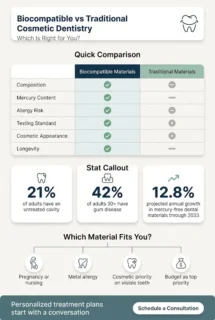
Quick Comparison: Biocompatible vs. Traditional Cosmetic Dentistry Materials
A formal safety standard evaluates the biocompatibility of dental materials, while mercury-free materials contain no mercury. Traditional amalgam relies on a metal alloy that has been used in dentistry for more than a century and remains an accepted material for many patients.
Choosing the wrong material without a full health review carries real consequences. According to the CDC Fast Facts on Cavities, nearly 21 percent of adults aged 20 to 64 have at least one untreated cavity.
The CDC Fast Facts on Gum Disease also reports that nearly 42 percent of adults 30 and older have some form of periodontitis. Delaying the right material choice can allow small problems to become bigger ones.
Patient interest in mercury-free options is also growing.
Coherent Market Insights projects the global mercury-free dental materials market to grow at a 12.8 percent compound annual growth rate, reaching close to 4.68 billion dollars by 2033.
This growth reflects how many patients now actively seek biocompatible alternatives before agreeing to any restorative work.
What Biocompatible Cosmetic Dentistry Does Best
Biocompatible dentistry starts with your full health picture, not just the tooth in front of the dentist. If you want mercury-free materials, a personalized health review, and a smile that blends naturally, this approach can address both health and cosmetic goals.
Choosing mercury-free, whole-body-safe materials matters most for patients with metal sensitivities, pregnancy concerns, or a general preference to avoid mercury exposure in restorative work.
Biocompatible options like composite resin and zirconia go through evaluation under ANSI/ADA Standard No. 41, an FDA-recognized consensus standard for testing how dental materials interact with human tissue over time.
The FDA's page on dental amalgam fillings confirms that amalgam releases low levels of mercury vapor that can be inhaled and absorbed by the body.
The EPA's guidance on mercury in dental amalgam adds that dental offices are a recognized source of mercury waste, which is one reason mercury-free alternatives continue gaining regulatory attention.
Some dentists who remove amalgam fillings use the SMART protocol, which outlines precautions intended to reduce mercury exposure during the procedure.
If you are considering amalgam removal, ask your dentist what precautions the practice uses during the procedure.
A personalized approach means reviewing your physical, environmental, emotional, and lifestyle factors before recommending any restorative or cosmetic procedure. This full health-history review helps identify sensitivities, prior reactions, or wellness goals that should shape your material choice.
A generic material recommendation skips this step entirely. It often leads patients back to the same decision months later with less information than they started with.
You do not have to choose between a natural-looking smile and long-term health. Composite and other biocompatible materials blend to your natural tooth shade while avoiding the mercury content found in amalgam.
Research on longevity is genuinely mixed. A 2025 systematic review hosted by the National Institutes of Health found that composite resin restorations had a higher failure rate than amalgam in some clinical settings.
Because the evidence is not fully settled, your right material still depends on your specific tooth location, bite pressure, and health profile.
What Traditional Cosmetic Dentistry Materials Offer
Traditional amalgam fillings use a mixture of mercury, silver, tin, zinc, and copper. Dentists have used this alloy in restorative work for over 150 years, and it typically costs less upfront.
Some clinical reviews show amalgam holds a comparable or slightly longer average lifespan in high-pressure posterior teeth. Amalgam does not match natural tooth color, and it contains elemental mercury.
Federal regulators flag mercury content as a consideration for pregnant patients, children, and mercury-sensitive individuals.
Amalgam remains a legally permitted material and is not inherently unsafe for the general population, but the newer biocompatibility-specific standard applied to materials like composite and zirconia does not cover it.
The Key Differences That Matter
The real difference between these two options is not just material composition. It is how each one fits your specific health profile and priorities and which trade-offs you are comfortable accepting.
Amalgam typically costs less upfront, but it does not provide the tooth-colored appearance of composite or other aesthetic restorative materials, especially on visible teeth.
Some studies favor amalgam on raw longevity numbers, but longevity alone does not account for allergy risk, mercury sensitivity, or how a material interacts with your specific health conditions over time. A filling that lasts longer is not automatically the right choice for your body.
Most articles comparing these two options stop at a generic pros-and-cons list. What they miss is a framework for matching the material to you specifically.
If you are pregnant or nursing, have a documented metal allergy, prioritize a natural cosmetic appearance, or have other health concerns, discuss your material options with your dentist.
If none of those factors apply and budget is your top priority, traditional materials remain a legally valid option worth discussing with your provider.
The right answer is not universal. It depends on your risk profile, and a personalized health history review is the only reliable way to determine it with confidence.
Which Option Is Best for You?
Biocompatible materials may appeal to patients who want mercury-free options, a personalized treatment plan, and cosmetic results that blend naturally with their smile.
Traditional materials may still work for patients with no allergy or mercury-sensitivity concerns who are prioritizing the lowest upfront cost on a single restoration.
Before choosing either option, ask your provider whether the practice offers mercury-free filling options, SMART-protocol amalgam removal, and a personalized plan based on your full health history rather than a standardized recommendation handed to every patient.
Frequently Asked Questions
Is biocompatible cosmetic dentistry safer than traditional amalgam fillings?
Biocompatible materials go through testing under a formal biocompatibility standard and contain no mercury, which makes them a lower-risk option for patients with metal sensitivities or mercury concerns. Traditional amalgam remains a legally permitted material for the general population, but the same testing framework does not cover it.
Do biocompatible fillings last as long as amalgam fillings?
Recent clinical research is mixed, with some reviews favoring amalgam on raw longevity and others showing composite performing comparably or better in large patient cohorts. Longevity depends heavily on tooth location, bite pressure, and how well the material is maintained over time.
What is the SMART protocol for removing old amalgam fillings?
SMART stands for Safe Mercury Amalgam Removal Technique, a set of precautions dentists follow to protect patients and staff from mercury vapor exposure during filling removal. If you are considering amalgam removal, ask your dentist what precautions the practice uses to reduce mercury exposure during the procedure.
Who should consider biocompatible materials over traditional options?
Patients who are pregnant or nursing, have documented metal allergies, want a natural cosmetic appearance on visible teeth, or simply prefer to avoid mercury exposure are typically strong candidates for biocompatible materials. A personalized health review helps confirm the right fit before treatment begins.
Does insurance cover biocompatible cosmetic dentistry?
Coverage varies by plan and procedure, so it is worth confirming with your provider whether your specific insurance plan covers biocompatible materials and what payment options are available if coverage is only partial.
Ready to Choose the Right Material for Your Smile
Your material choice should reflect your health history, not a generic recommendation. Understanding the differences between biocompatible and traditional materials can help you make an informed choice for your smile. Schedule a personalized consultation with Victor Zeines, DDS, MS, to review your health profile and find the cosmetic dentistry benefits that fit your smile and your overall wellness. Book your visit today.
To schedule a consultation, request an appointment on our website at https://www.natdent.com or call Victor Zeines, DDS, MS at (212) 754-2222 for an appointment in our New York office.
Check out what others are saying about our dental services on Yelp: Cosmetic Dentist in New York, NY.
Related Posts
Many people will lose at least one tooth at some point in their lives, which can lead to oral health issues. Fortunately, a restorative dentist can replace missing teeth in several ways. These options can help patients restore the function and appearance of their smiles.Bone tissues need to be regularly stimulated to remain healthy, as…
General dentistry is responsible for addressing all routine things relating to the teeth, including damage that occurs. Teeth become damaged as a result of many things, such as injury, accidents, natural wear and tear, or cavities. Whatever the reasoning may be for a damaged tooth, there are a lot of treatment options available in general…
A general dentist is the go-to dental professional to visit when needing a restorative procedure. Although the teeth are meant to last forever, accidents happen, and normal wear and tear and damage also occur. The result of both problems is needing to visit a general dentist for a dental restoration. Thankfully, there are many ways…
Search "dental implants" online, and you will find conflicting opinions on which material is better for a dental implant procedure: zirconia or titanium. Some sites push metal-free dental implants as the only safe choice for every patient. Others insist titanium is the proven standard, and nothing else compares.The truth sits in the middle, and it…